
Case Study
Napoli Explosion WebXR Case Study: Meta Quest 3 NYA
How The Byte-sized helped shape NYA, a Meta Quest 3 WebXR museum experience for Napoli Explosion in Naples, turning a VR gesture into visual memory.
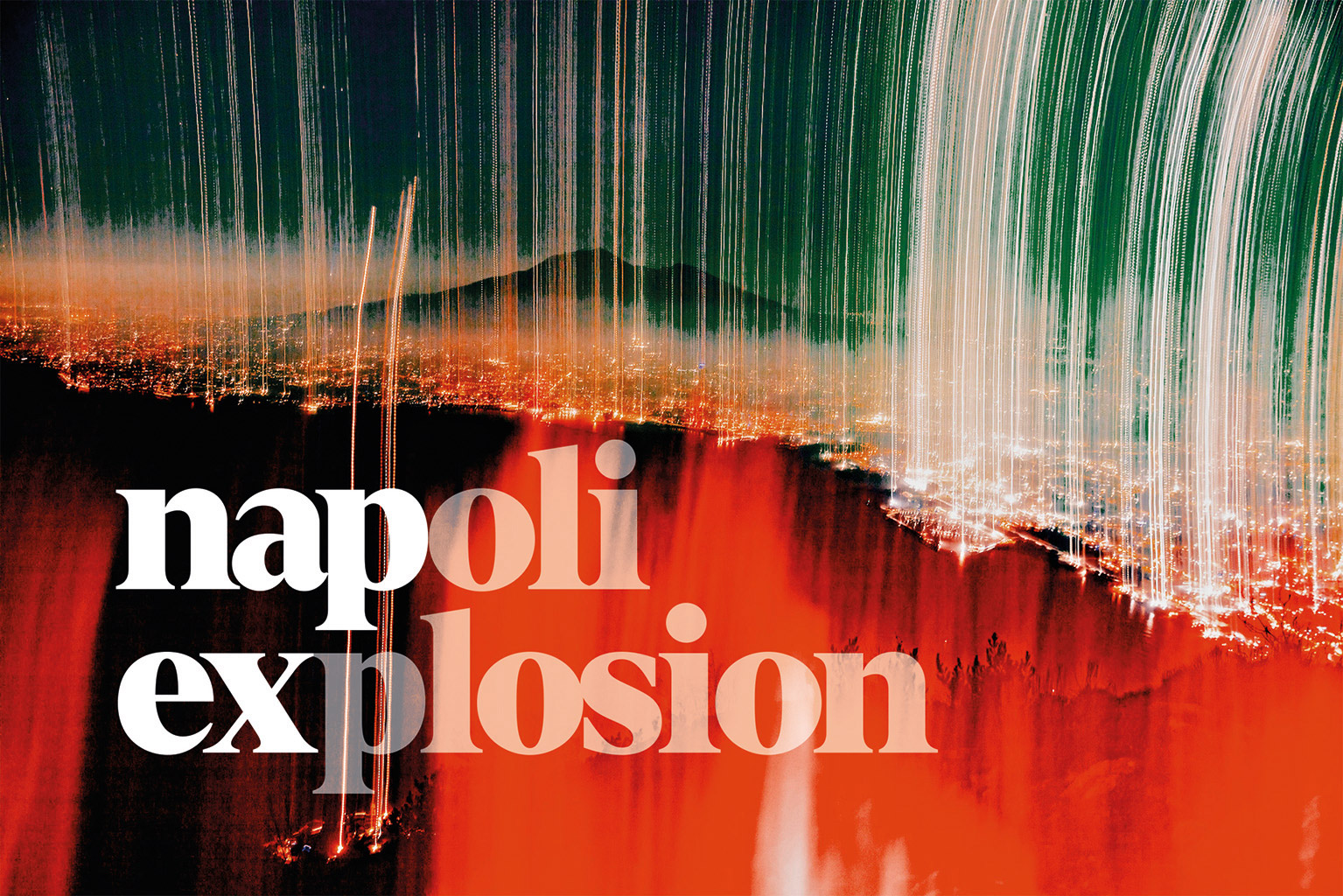
Napoli Explosion WebXR Case Study: Meta Quest 3 NYA
NYA, or Now Your Art, was the Meta Quest 3 WebXR museum experience connected to Napoli Explosion, the exhibition by Mario Amura at the Real Albergo dei Poveri in Naples.
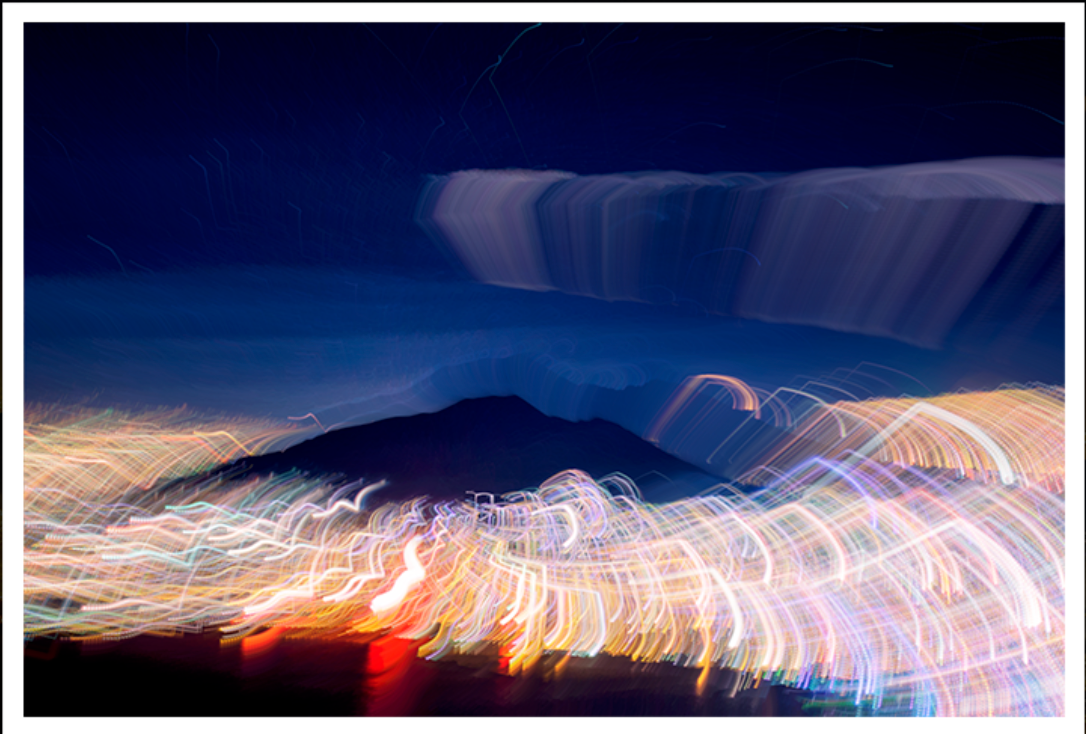
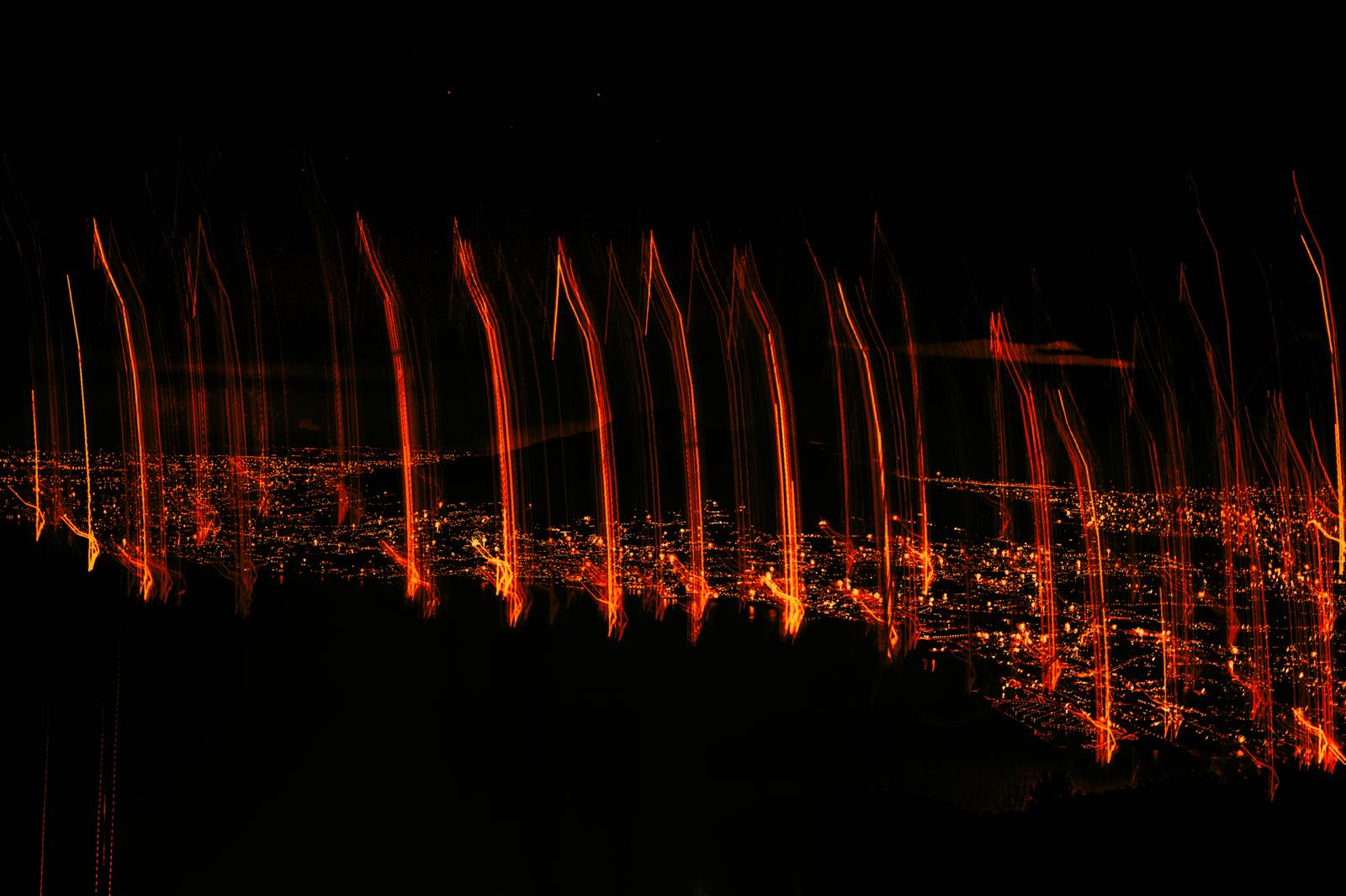
The exhibition focused on a precise and powerful image: the New Year’s Eve explosion of light across the Gulf of Naples, photographed from Monte Faito over more than fourteen years. The official NAPEX exhibition page presents Napoli Explosion as 33 new large-format works by Mario Amura, curated by Sylvain Bellenger, staged at Real Albergo dei Poveri for Napoli2500. The Comune di Napoli event page records the public exhibition dates, from December 15, 2025 to April 19, 2026, and frames the show as a meeting point between innovation, culture, and Naples’ visual heritage.
The official NAPEX approfondimenti PDF makes the connection even clearer: in the section dedicated to the immersive work, NYA - Now Your Art is presented as part of Mario Amura’s artistic world, not as a detached digital add-on.
The challenge for NYA was not to make technology look impressive.
It was more difficult than that:
How do you add an immersive VR layer to a museum exhibition without making the technology compete with the artwork?
The Byte-sized collaborated on the technology side of the NYA experience, helping turn that question into a browser-based WebXR journey for Meta Quest 3 where visitors could enter the atmosphere of the work, make a gesture in VR, and leave with a personal visual memory.
For museums, cultural institutions, foundations, and creative technology teams, this case study is a practical example of how to build an immersive exhibition experience around visitor meaning, not technical spectacle.
Project snapshot
- Project: NYA, or Now Your Art
- Exhibition: Napoli Explosion by Mario Amura
- Public exhibition dates: December 15, 2025 to April 19, 2026
- Venue: Real Albergo dei Poveri, Naples
- Hardware: Meta Quest 3
- Experience type: browser-based WebXR museum experience
- Visitor action: draw a VR gesture and receive a personalized visual output
- Official framing: immersive artwork connected to Mario Amura’s photographic process
- The Byte-sized role: technology collaboration across immersive flow, interaction design, generated result journey, and public-use reliability
What is the NAPEX NYA WebXR museum experience?
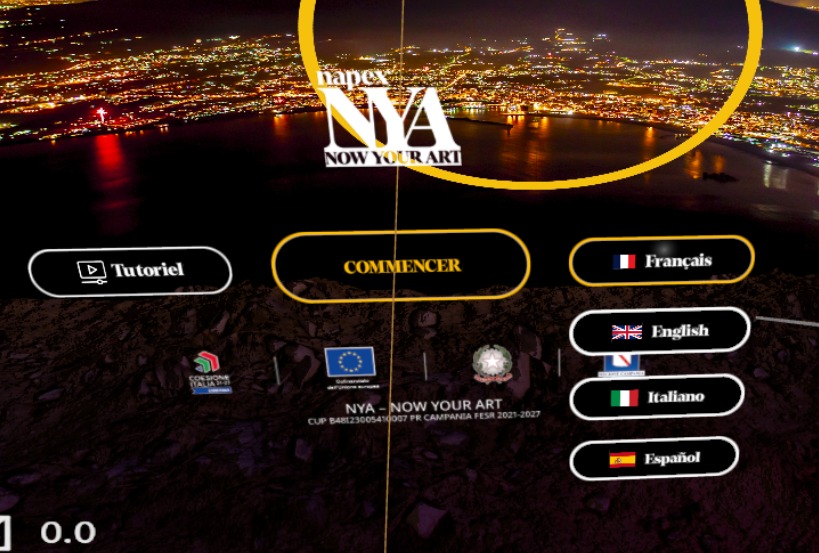
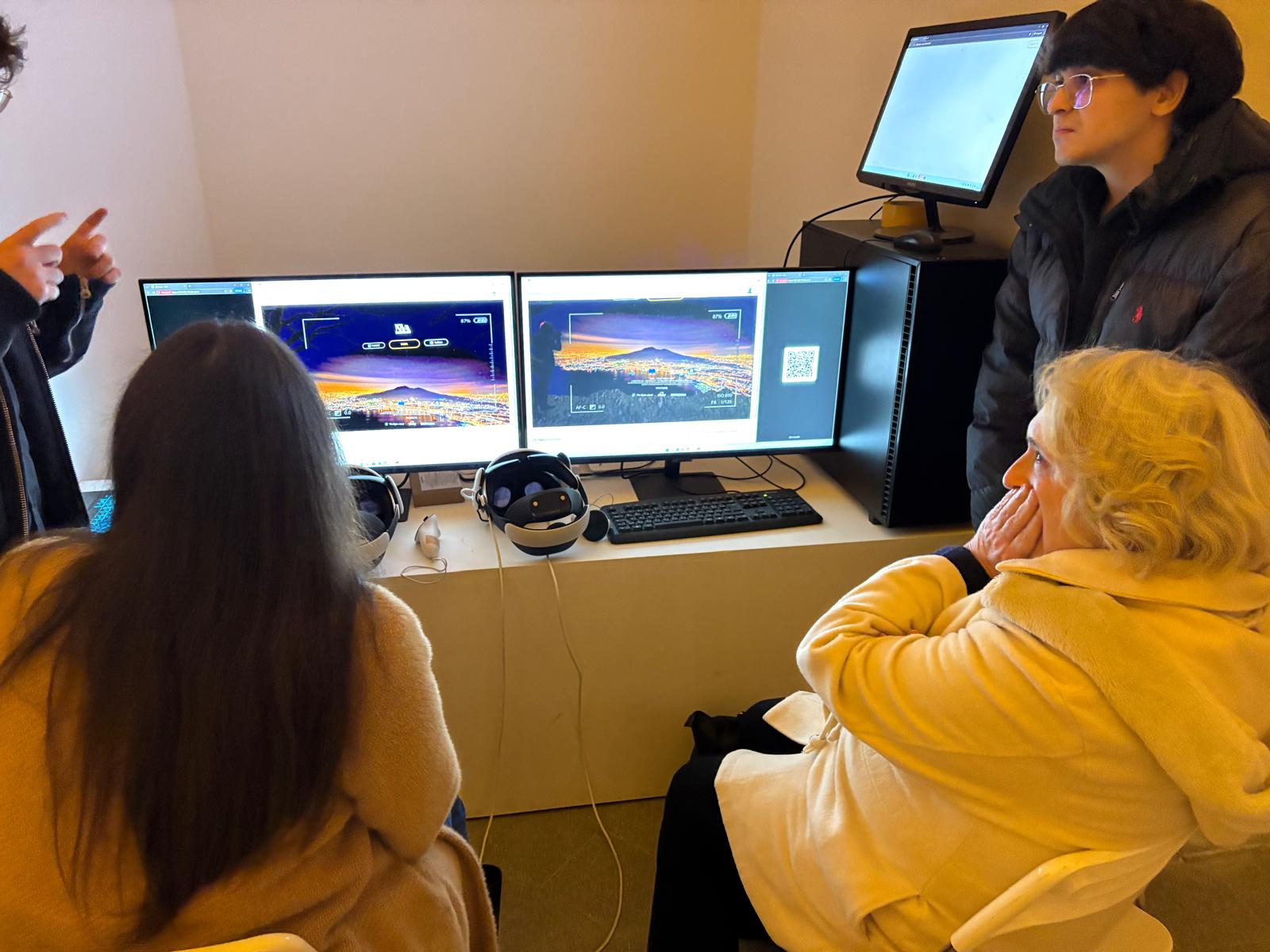
NAPEX NYA was an immersive museum experience designed as a digital extension of Napoli Explosion, with Meta Quest 3 as the reference headset for the visitor-facing VR flow.
From the visitor’s point of view, the journey was intentionally simple:
- put on a Meta Quest 3 headset and enter a guided VR experience;
- observe the New Year’s Eve lights around Vesuvio from the Monte Faito viewpoint;
- move between different visual distances, almost like looking through a photographic lens;
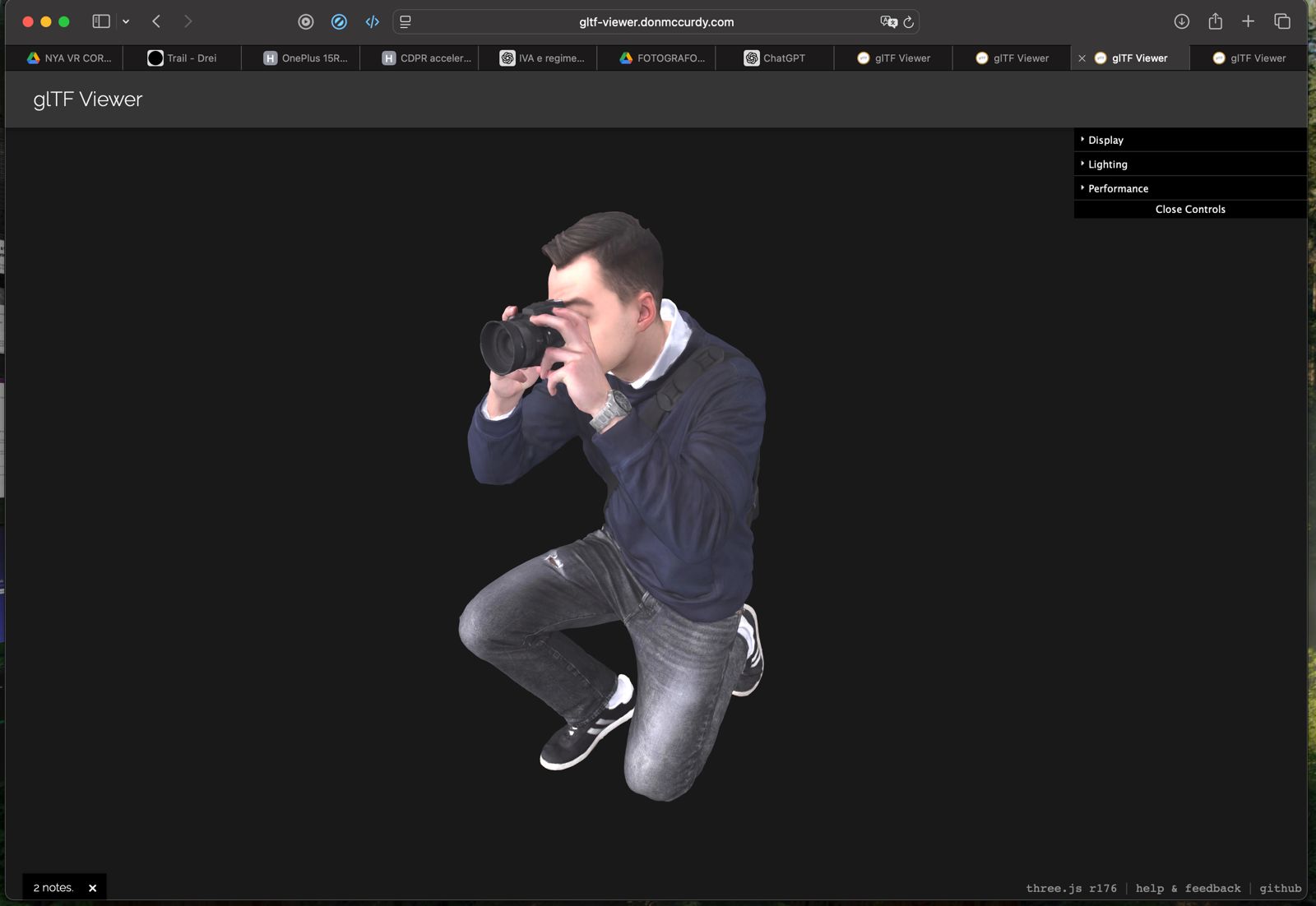
- use the VR controller to perform a simple capture gesture;
- transform hand movement and light trails into a unique generated visual output;
- view and share the result as a memory of the exhibition.
Under the surface, the experience coordinated a persistent 3D scene, headset interaction, controller tracking, spatial audio, video playback, animated states, localization, and API communication for the generated result.
But none of that was the point.
The point was to let the visitor step into the light, act inside the experience, and receive a trace of that action.
What the official NAPEX source adds
The NAPEX approfondimenti document is useful because it positions NYA as an immersive artwork with its own curatorial logic.
The visitor was not only “using VR.” They were entering a viewpoint related to Amura’s photographic process: the fireworks could be observed from changing distances, the point of view became mobile, and the controller gesture became a way to make an image from light.
That changed the product brief.
The goal was not to make visitors draw in 3D. It was to make the photographic logic of Napoli Explosion participatory: light, distance, gesture, capture, and memory had to feel like one continuous action.
The official document also frames the generated result as more than a screen output. The image could be kept as a digital token, shared socially, or connected to a Fine Art print, but its real value was the process: the visitor entered the luminous material of the celebration and turned it into a personal vision.
Why this mattered for Napoli Explosion
Napoli Explosion is already immersive before any headset appears.
Mario Amura’s work turns a public ritual - New Year’s Eve fireworks across Naples - into a long act of observation. Seen from Monte Faito, the city becomes a field of light around Vesuvio. What might otherwise be read as spectacle becomes a visual language: collective, emotional, distant, and precise.
That meant the digital layer had to be careful.
In a cultural context like Real Albergo dei Poveri, an immersive installation has a different responsibility from a brand activation or a trade-show demo. It must support the work, the space, the curatorial story, and the visitor’s attention at the same time.
The official exhibition context made that responsibility even clearer: Napoli Explosion was promoted by the Comune di Napoli, developed with CTE - Infiniti Mondi, connected to Napoli2500, and presented as the closing moment of a public program focused on emerging technologies for cultural and creative industries.
So NYA could not be treated as “a VR feature.” It had to behave like part of the exhibition.
The product challenge: make the visitor part of the image
The core product challenge was simple to state and hard to execute:
Turn a visitor’s gesture into a meaningful output without making the visitor feel like they are operating software.
That shaped the whole experience.
The journey had to be:
- fast to understand, because museum visitors do not arrive with onboarding patience;
- reliable in repetition, because exhibition experiences are used again and again;
- emotionally coherent, because the interaction had to feel connected to light, movement, and memory;
- quietly technical, because the stack should disappear behind the moment;
- shareable, because the final output had to extend the visit beyond the headset.
This is the same discipline we use in other product work: define the core user role before adding feature depth. In a two-sided platform, that might mean building credibility before completeness. In a cultural WebXR installation, it means protecting the visitor’s attention before adding more interaction.
Why WebXR was the right foundation
WebXR made sense for NYA because the experience needed to be immersive, practical, and adaptable.
A native VR app can be powerful, but it can also make iteration heavier. For a museum or cultural installation, that matters. Content may need to change, the experience may need to be adjusted around the venue, and the deployment process needs to remain manageable for a public-facing setup.
Using Meta Quest 3 as the reference headset also kept the interaction design concrete. The visitor was not using an abstract “VR device.” The experience could be shaped around a specific headset, a specific controller interaction, and a public exhibition setting where clarity matters more than technical explanation.
WebXR kept the experience closer to the web while still supporting the key ingredients:
- immersive headset mode on Meta Quest 3;
- controller input;
- browser-based 3D scenes;
- video and audio orchestration;
- generated output flows;
- a delivery model that could be maintained without treating every change like a full native release.
There is a real trade-off here. WebXR support depends on browser, headset, and secure deployment constraints, so it should not be sold as a universal answer for every exhibition.
For NYA, it fit the product need: an immersive museum experience that could feel natural to the visitor while remaining practical for the team operating the installation.
For a broader view of how we think about moving from prototype energy to production constraints, read Prototype to Product Hardening.
The interaction: a VR gesture becomes a personal visual memory
The most important interaction in NYA was the visitor’s gesture.
During the experience, the right-hand controller recorded a movement trail in 3D space. That trail was not just an input mechanism. It became part of the creative data used to produce the final visual result.
This gave the experience a clear emotional arc:
- the exhibition shows a collective ritual of light;
- the VR layer places the visitor inside that atmosphere;
- the visitor moves through the scene and draws a trace;
- the system turns that trace into a personal generated output;
- the visitor leaves with something tied to their own action.
That distinction matters.
Watching a 360-degree scene can be impressive, but it is still mostly passive. NYA added a small act of participation. The visitor did not just see the light. They left a trace inside it.
What The Byte-sized focused on
The Byte-sized worked on the technology side of the NYA experience, with a focus on making the immersive flow feel legible, stable, and exhibition-ready.
The work sat across four product layers:
1. Visitor flow
The experience needed a clear path from entry to result: guided start, tutorial, immersive scene, gesture, generation, final visual, and sharing.
That path matters because every extra moment of confusion breaks presence. In public cultural settings, the best interface is often the one the visitor barely notices.
2. Immersive interaction
The Meta Quest 3 controller gesture had to feel direct enough for first-time users. The interaction could not depend on long instructions or technical curiosity.
This is where immersive museum design differs from internal tools. You do not get weeks of user training. You get seconds.
3. Media and state orchestration
Video, audio, progress states, loading behavior, and API calls all had to line up so the experience felt continuous.
The visitor should not experience the system as “scene, loading, backend, output.” It should feel like one connected journey.
4. Public-use resilience
Museum installations are not one-person demos. They are repeated, watched, restarted, handed over, and used by people with different levels of technical confidence.
That pushed the implementation toward repeatable states, clear progress feedback, and a flow that could recover between visitors.
What makes this a useful case study for cultural technology teams
Many cultural technology projects start from a tool: VR, AR, AI, projection mapping, generative media, interactive screens.
That is understandable, but it is also risky.
The better starting point is the visitor’s role:
- What should the person feel?
- What should they do?
- What should they understand without explanation?
- What should they take away?
- What would make the technology feel unnecessary, confusing, or self-important?
Once those questions are answered, the technical choices become clearer.
For NYA, the answer was:
Let the visitor enter the atmosphere of Napoli Explosion, make a gesture, and leave with a visual trace of that gesture.
Everything else existed to protect that moment.
Results without overclaiming
This case study is intentionally careful about claims.
NYA is useful because it shows a grounded pattern for cultural WebXR, not because one headset or one technology choice can solve museum engagement on its own:
- a browser-based Meta Quest 3 WebXR museum experience connected to a real public exhibition;
- a visitor journey that linked immersive presence, gesture, generation, and sharing;
- a technical foundation designed around clarity rather than novelty;
- a repeatable pattern for cultural teams exploring immersive installations;
- a concrete example of creative technology serving a curatorial story.
That is the lesson worth carrying forward.
An immersive museum experience succeeds when the visitor remembers the artwork first and the technology second.
For museums and cultural teams planning a WebXR installation
If you are planning a VR museum experience, WebXR installation, interactive exhibition, or creative technology layer for cultural heritage, the most important decision is not the headset, the engine, or the model.
It is the visitor role.
Start there. Then shape the technology around it.
The same principle applies across product delivery. In MVP Demo vs. Real Product, we look at the difference between something that works once and something that can survive real use. In EVOC: Crowdsourced Reports to Territorial Intelligence, the product value came from a complete loop, not from an isolated interface. In Two-Sided Marketplace MVP, credibility came before feature completeness.
NYA followed the same underlying rule:
Build the smallest reliable experience that makes the user’s role unmistakable.
For Napoli Explosion, that meant letting visitors enter the light, make a gesture, and leave with a memory.
For your own cultural technology project, it may mean something else. But the discipline is the same: make the experience clear enough that the technology can become quiet.
FAQ about NAPEX NYA and Meta Quest 3
What is a WebXR museum experience?
A WebXR museum experience is an immersive exhibition layer that runs through compatible web browsers and headsets. For museums and cultural institutions, it can support VR-style interaction without turning every visitor-facing update into a native app release.
What was NYA in Napoli Explosion?
NYA, or Now Your Art, was the immersive VR layer connected to Napoli Explosion. It let visitors step into the New Year’s Eve atmosphere seen from Monte Faito and create a personalized visual output linked to their own gesture.
What did The Byte-sized contribute to NAPEX NYA?
The Byte-sized collaborated on the technology side of the NYA experience, focusing on the browser-based immersive flow, VR interaction model, generated result journey, and technical foundation needed for a public cultural setting.
Did the NYA WebXR museum experience use Meta Quest 3?
Yes. Meta Quest 3 was the reference headset for the visitor-facing immersive experience, which made the headset and controller interaction a central part of the product design rather than an afterthought.
Why use WebXR instead of a native VR app for an exhibition?
WebXR can make iteration, deployment, and content updates lighter while still supporting headset interaction, controller input, immersive 3D scenes, audio, video, and generated output flows. It is not right for every context, but it fit NYA’s need for a practical browser-based cultural touchpoint.
How can museums use immersive technology without distracting from the artwork?
The strongest immersive museum experiences start from the visitor’s role, not the tool. The technology should make the action clear, reduce friction, respect the curatorial narrative, and help visitors leave with a stronger memory of the work.
Next reads
Planning a cultural WebXR experience or immersive museum installation? Explore our product delivery services, read AI as Accelerator, Not Autopilot if your installation includes generative output, or talk to The Byte-sized about the visitor journey you want to create.
Next step
Ready for the next byte?
Turn this framework into a scoped MVP plan with a tight delivery loop.